10
Walk into almost any gym on a Monday evening and you will see the same scene play out in different corners of the room. Someone is swinging heavy dumbbells up during bicep curls using their lower back for momentum. Across the floor, another lifter is loading extra plates onto a squat bar only to dip a few inches before standing back up. The effort is undeniable, yet the results rarely match the sweat.
In strength and fitness training, how you move matters just as much as how much weight you lift or how many reps you finish. Proper form is not about looking polished in front of a mirror or following rigid textbook rules for the sake of perfection. It is the practical foundation that directs force into the muscles you want to train, protects your joints from unnecessary wear, and allows you to keep making progress for years instead of cycling through preventable setbacks.
What Proper Form Actually Means
Many beginners assume that good form means copying an instructor’s exact posture down to the millimeter. In reality, human anatomy varies widely. Two people with different femur lengths, hip socket depths, or shoulder mobility will naturally look slightly different when performing the same squat or overhead press.
Instead of a single rigid template, proper form comes down to a few universal principles:
-
Joint alignment: Keeping your wrists, elbows, shoulders, spine, hips, knees, and ankles stacked in strong, stable positions while under load.
-
Controlled tempo: Moving the weight deliberately rather than letting gravity drop it or using body English to yank it upward.
-
Usable range of motion: Taking a joint through as much range as you can actively control without losing stability or compensating elsewhere.
-
Intentional bracing: Engaging your core and coordinating your breathing so your torso stays steady while your arms and legs do the work.
When those elements are in place, an exercise feels smooth, repeatable, and centered in the muscles it is meant to challenge.
Protecting Your Joints and Preventing Avoidable Injuries
Every time you lift a weight, perform a push-up, or sprint up a hill, mechanical force travels through your body. Your muscles are designed to absorb and produce that force. Your joints, ligaments, tendons, and spinal discs are designed to support movement, not to absorb sloppy, uncontrolled loads.
When form breaks down, stress shifts away from the working muscles and lands directly on passive tissues. Sometimes the consequence is immediate, like a sharp tweak in the lower back when rounding the spine to pull a heavy deadlift off the floor. More often, poor mechanics cause overuse injuries that creep up quietly over months. Flaring your elbows too wide on a bench press, shrugging your shoulders during rows, or letting your knees cave inward on every lunge might not hurt on day one. Repeat those patterns a thousand times, however, and nagging tendonitis or joint irritation becomes almost inevitable.
Good form acts as built-in insurance. By keeping joints properly aligned and distributing tension across the right muscle groups, you dramatically lower the risk of being sidelined right when your routine starts gaining momentum.
Getting More Results Out of Every Rep
Safety is usually the first argument people hear for cleaning up their technique, but effectiveness is just as compelling. If your goal is to build muscle, get stronger, or improve athletic performance, sloppy reps actively work against you.
Muscle growth and strength adaptations depend heavily on mechanical tension—the sustained load placed directly on the target muscle fibers as they lengthen and contract. The moment you use momentum to heave a weight upward, or bounce out of the bottom of a movement, you steal that tension away from the muscle you are trying to train.
Consider a simple dumbbell lateral raise meant to build the side of the shoulders. Using a lighter pair of dumbbells with a steady torso and a controlled pause at the top places continuous work on the deltoids. Grabbing weights that are too heavy forces you to swing your hips, bend your elbows excessively, and hike your traps toward your ears. You end up moving more weight, yet the target muscle actually does less work. Mastering form lets you get far more stimulus out of lighter, safer loads.
Making Strength Progress Honest and Measurable
Long-term fitness relies on progressive overload—gradually asking your body to do a little more over time, whether by adding weight, doing an extra rep, or improving control. Progressive overload only works, however, if your technique stays consistent from week to week.
If you squat 135 pounds to full depth this month and “squat” 165 pounds next month by cutting the movement in half, you have not actually gotten stronger. You simply shortened the range of motion to make the heavier bar feel manageable. The same thing happens when someone adds weight to a lat pulldown by leaning all the way back and turning it into a row.
Treating proper form as a non-negotiable standard keeps your training honest. When every rep looks the same, you know with certainty that an extra five pounds on the bar or two additional reps represents real physical progress.
Common Form Breakdowns to Watch For
Even experienced lifters slip into bad habits when they get tired, distracted, or overly eager to hit a new personal record. Knowing the most frequent breakdowns makes it much easier to catch them early.
Rounding the Lower Back Under Load
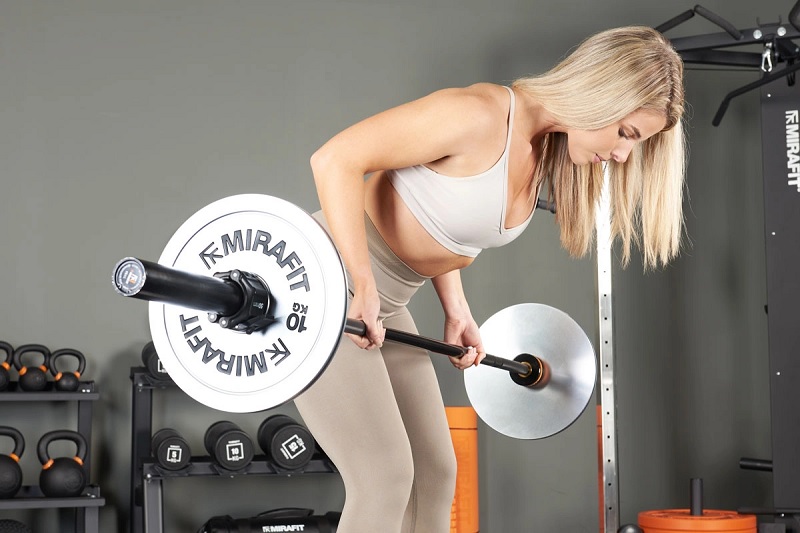
This shows up most often during deadlifts, bent-over rows, and the bottom of deep squats. When the core loses tension or the hamstrings are too tight for the setup, the lumbar spine flexes to compensate. Keeping a neutral spine—neither excessively rounded nor aggressively overarched—protects the discs and allows your hips and legs to generate far more power.
Letting the Knees Collapse Inward
During squats, lunges, and step-ups, fatigue or weak outer-hip muscles can cause the knees to drift toward each other as you push back up. Focusing on keeping your knees tracking roughly in line with your middle toes spreads the load evenly across the knee joint and keeps your glutes properly engaged.
Relying on Momentum Instead of Control
Rushing through reps is one of the fastest ways to lose the benefit of an exercise. Dropping quickly into a push-up and bouncing off the bottom, or swinging your torso during curls and cable exercises, turns strength work into careless motion. If you cannot pause smoothly for a second at the hardest part of a movement, the weight is probably too heavy.
Holding Your Breath or Ignoring Core Bracing
Breathing is an overlooked part of technique. Many people either hold their breath for an entire set—causing lightheadedness and spikes in blood pressure—or breathe shallowly into their chest while leaving their midsection soft. A steady habit of taking a controlled breath into your belly, bracing your abs as if preparing for a light poke, and exhaling smoothly through the effort stabilizes your spine and improves power output.
Practical Ways to Improve Your Form
Cleaning up your technique does not require hiring a full-time coach or obsessing over every minor detail. A few deliberate adjustments in how you approach your workouts will pay off quickly.
Check your ego and lighten the load. If you are learning a new exercise or fixing an old habit, drop the weight by 20 to 30 percent. Lighter loads let your nervous system practice the right movement path without panic or compensation. Once the pattern feels automatic, you can build the weight back up—often surpassing your old numbers safely.
Slow down the lowering phase. Taking two to three seconds to lower a weight removes momentum immediately and exposes weak spots in your control. It also builds eccentric strength, which strengthens tendons and improves joint stability.
Use video instead of twisting toward the mirror. Checking your reflection mid-lift often forces you to turn your head during a deadlift or squat, pulling your neck and spine out of alignment. Propping your phone up to record a quick side-angle set gives you a much clearer, safer look at your actual mechanics.
End your set at technical failure. In strength training, there is a big difference between muscular fatigue and form breakdown. Pushing through the last two reps while your back rounds or your shoulders hunch rarely builds extra muscle, and it sharply increases injury risk. Stop the set when you can no longer perform another rep with solid, recognizable form.
Building a Routine That Lasts
Anyone can push through a few weeks of reckless workouts and feel exhausted afterward. Exhaustion, however, is not the same as effective training. The people who build lasting strength, resilient joints, and noticeable fitness over the years are almost always the ones who respect the basics.
Prioritizing proper form turns every workout into an investment rather than a gamble. It keeps your joints comfortable, directs your effort where it actually counts, and gives you a reliable way to measure improvement. Whether you are picking up your first pair of dumbbells at home or refining years of barbell training, slowing down and owning every repetition is the smartest shortcut to better results.